


There's nothing worse than setting off on your e-bike with a fully charged battery, only to find the charge disappearing much faster than expected. Whether you're commuting to work, tackling your usual weekend route or simply heading into town, a sudden drop in battery range can quickly become a problem, especially if not addressed promptly.
The bright side? An electric bike battery draining fast doesn't automatically mean the battery needs replacing. Everything from cold weather and tyre pressure to riding conditions and general maintenance can influence how far your e-bike travels on a single charge. So rest assured your pocket's can take a break with this one.
In this guide, we'll explore seven common reasons your e-bike battery might be losing charge faster than usual, explain how to identify the cause and share practical ways to get more from every ride.
Why Is Your Electric Bike Battery Draining Faster Than Expected?
Electric bike range isn't a fixed figure. Manufacturers typically provide estimated ranges based on particular riding conditions, but your actual mileage will depend on how and where you ride. Battery capacity, motor efficiency, assistance settings, terrain and temperature all play a part. That's why two people riding identical electric bikes can experience noticeably different results.
When comparing models in our electric bike collection, it's worth remembering that advertised range figures are estimates rather than guaranteed distances. If your electric bike range is dropping, the following seven factors are worth checking before assuming there's an electrical fault.
1. Cold UK Weather Is Affecting Your Battery Performance
If you've noticed your battery draining faster during autumn or winter, you're certainly not alone. Most modern e-bikes use lithium-ion batteries, which become less efficient in colder temperatures. As temperatures fall, the battery's internal resistance increases, temporarily reducing the energy it can deliver.
This is particularly noticeable during British winters, especially if your bike spends the night in an unheated garage, shed or even under a tarp.

How to fix it
-
Store removable batteries in a dry, temperature-controlled environment, following the manufacturer's guidance.
-
Fit the battery shortly before riding rather than leaving it exposed to the cold overnight.
-
Allow a cold battery to reach a suitable charging temperature before plugging it in.
-
Expect some reduction in range during particularly cold journeys.
Importantly, reduced winter performance doesn't necessarily indicate permanent battery damage. Range will often improve once temperatures become milder and more managable. Don't always jump to the conclusion you're battery needs to be replaced.
2. Your Tyre Pressure Is Too Low
Underinflated tyres are one of the easiest problems to overlook when investigating poor electric bike range. When tyre pressure drops, more rubber contacts and deforms against the road, increasing rolling resistance. Your motor then needs to work harder to maintain speed, using more battery energy in the process. Relative to any car and fuel, underinflated tyres often cause an increase in fuel consumption.
This can be particularly noticeable on heavier e-bikes and models fitted with wider tyres.

How to fix it
Check your tyre pressure regularly using a reliable pressure gauge. Always make sure to follow the recommended pressure range for your tyres, taking account of the manufacturer's guidance, rider weight and riding conditions.
Avoid simply inflating tyres to the maximum pressure printed on the sidewall. The correct pressure should balance rolling efficiency, comfort and grip.
A quick tyre check before setting off can help prevent unnecessary battery consumption, and therefore improving your ride.
3. Hills, Rider Weight and Heavy Loads Increase Battery Demand
Your electric bike's motor works harder when climbing hills or carrying additional weight.
If your usual journey includes steep inclines, frequent climbs or a heavily loaded bike, you'll naturally consume more energy than someone riding on relatively flat roads. Rider weight, luggage, shopping bags and accessories all contribute to the total load.
Strong headwinds can have a similar effect, particularly when riding along exposed roads or coastal routes, again, similar to long or high sided vehicles on motorways. They're more prone to wind, and this same concept applies to bicycles too.
How to fix it
Try reducing unnecessary luggage and selecting an appropriate gear before approaching hills.
Where possible, maintain a steady pedalling rhythm rather than relying entirely on the motor to handle difficult sections.
You don't need to avoid hills altogether. Understanding how different routes influence battery consumption simply helps you plan journeys more realistically, and more efficiently.
4. You're Using Too Much Pedal Assistance
One of the biggest influences on electric bike range is the amount of motor assistance you use. Higher assistance settings provide additional support, making acceleration and hill climbing easier. However, that extra power comes directly from your battery. And if you regularly ride using the highest assistance mode, your battery will generally drain faster than when using a lower setting.
Frequent stopping and starting can also increase energy consumption, as the motor repeatedly helps accelerate the bike, try maintain a steady speed, and also where applicable, use gravity to assist you rather than the bike.
How to fix it
Try using a lower assistance setting on flat roads and save higher assistance levels for hills or more demanding sections.
Select gears that allow you to pedal comfortably and avoid unnecessary hard acceleration.
Even small changes to your riding habits can help extend your available range without making every journey feel like a workout, just keep a closer eye on what gear you use and if it's necessary.
5. Your Battery Is Ageing or Has Been Stored Incorrectly
Like the battery in your phone or laptop, an electric bike battery gradually loses capacity as it ages.
Every battery has a finite service life, and factors such as charging cycles, temperature exposure, usage and storage conditions can influence how quickly its capacity declines.
If your e-bike battery is losing charge more quickly than it did when new, natural ageing could be part of the explanation.
Poor storage habits may also contribute. Leaving a battery completely discharged for extended periods or exposing it to excessive heat can accelerate deterioration.

How to fix it
-
Always use the charger supplied or specifically approved by the manufacturer.
-
Follow the manufacturer's instructions for charging and long-term storage.
-
Avoid leaving batteries completely discharged for extended periods.
-
Keep batteries away from excessive heat, direct sunlight and extreme cold.
-
Disconnect the charger when charging is complete, and never charge while asleep or away from home.
For longer periods without riding, check your manufacturer's recommended storage charge level rather than automatically storing the battery fully charged.
Good battery care won't prevent ageing entirely, but it can help preserve performance over time.
6. Dragging Brakes or Mechanical Problems Are Creating Resistance
Sometimes the battery itself isn't the problem at all. A dragging brake, poorly adjusted drivetrain or worn wheel bearing can make your electric bike harder to move. This additional resistance forces the motor to use more energy than necessary.
A brake that constantly rubs against the wheel may be especially noticeable when riding without motor assistance. It may sound like a headache, but it's vital if you wish to maintain that high level of performance.
How to fix it
With the bike switched off and safely supported, check whether the wheels rotate freely.
Listen for unusual rubbing noises and pay attention to whether the bike feels noticeably harder to pedal than usual.
Also inspect the chain for excessive dirt, rust or poor lubrication. A good clean once in a while always goes a long way.
If you suspect brake binding, bearing problems or another mechanical fault, arrange an inspection before riding again. Correctly functioning brakes are essential for safety, and adjustments should be completed by someone competent.
Regular maintenance helps your e-bike run efficiently and can prevent smaller problems from developing into expensive repairs.
Feel free to contact us at Trail Surge as we offer a range of service's and repair's to maintain your bike's health, and help you get the best version of your bike possible.
7. Your Battery, Charger or Electrical System Has Developed a Fault
If you've ruled out weather, riding conditions and mechanical resistance, there may be an issue with the battery or electrical system.
Potential problems include ageing battery cells, charging faults, damaged connectors or issues with the battery management system.
Common warning signs include:
-
Battery percentage dropping unusually quickly during normal riding.
-
The bike unexpectedly shutting down despite showing remaining charge.
-
The battery failing to reach a full charge.
-
Charging behaviour becoming inconsistent.
-
A significant loss of range under otherwise similar conditions.
Not every symptom confirms a faulty battery. For example, a voltage-related battery indicator may temporarily drop under heavy motor demand.
However, repeated or worsening problems deserve professional attention. Certainly if you rely on your bike for everyday life.
How to fix it
Start by checking the manufacturer's troubleshooting instructions and any error messages shown on your display.
Do not attempt to open, modify or rebuild a lithium-ion battery yourself.
If the battery is swollen, leaking, physically damaged, unusually hot or producing strange smells or noises, stop using and charging it immediately and seek professional safety advice.
If replacement is necessary, make sure the battery is specifically approved for your e-bike model. Compatibility should always be confirmed before purchasing, as receiving a battery that doesn't work with your bike is an unnecessary headache.
How to Check What's Causing Your Electric Bike Range to Drop
Before replacing any components, it helps to establish whether your battery performance has genuinely changed. If the battery shows no signs of damage or unsafe behaviour, compare your range over a familiar route using similar assistance settings, tyre pressures and loads.
Consider whether the weather has become colder, your route has changed or you're using more assistance than previously.
Keeping a simple record of distance travelled and remaining battery percentage over several normal journeys can help identify a pattern.
Remember that battery percentage displays aren't always perfectly accurate, so one unusual reading isn't enough to diagnose a fault. It's important to never rely on 1 inaccurate prediction and jump to the conclusion of a new battery, always thoroughly test it out. If you're unsure, seek professional advice.
When Should You Contact a Professional E-Bike Technician?
If your electric bike continues to lose range despite checking the common causes, a professional inspection is the sensible next step.
An experienced technician can assess mechanical resistance, battery connections, charger operation and supported electrical diagnostics to help narrow down the problem.
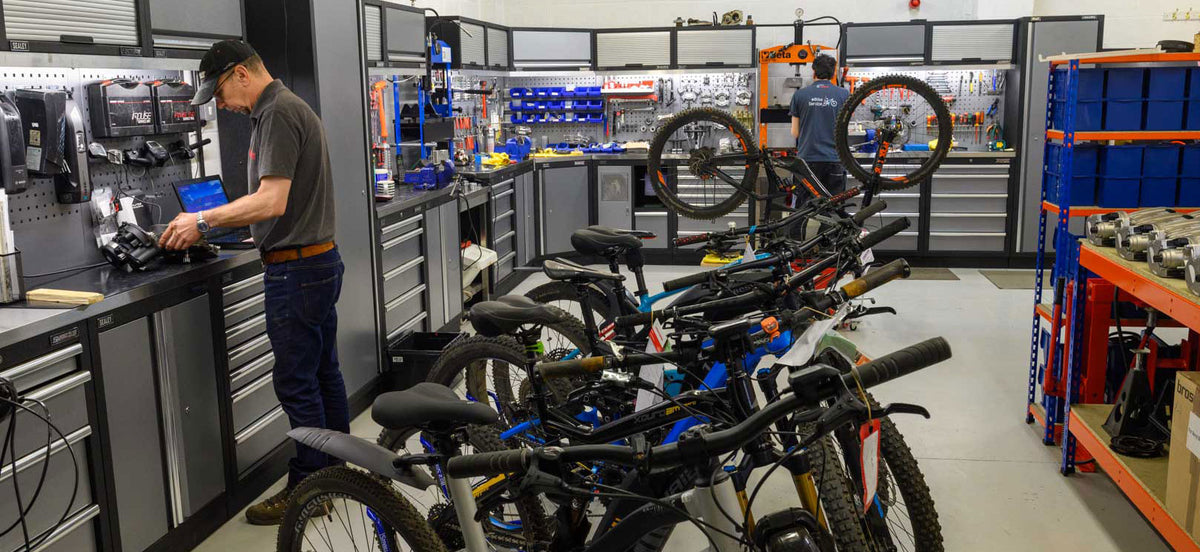
At TrailSurge, our Nuneaton workshop provides electric bike servicing, repairs and diagnostics, including battery and charger checks, brake servicing and general electrical fault finding.
Not every battery problem can be repaired, and internal lithium battery rebuilding isn't a service we carry out. However, identifying the underlying issue can help you avoid spending money on replacement parts unnecessarily.
Our workshop operates by appointment, so please contact us before visiting.
Final Thoughts: Get More Miles From Your E-Bike Battery
If you've been wondering, "Why does my e-bike battery drain quickly?", remember that a shorter range doesn't always point to a failing battery.
Cold weather, low tyre pressure, steep hills, high assistance settings and mechanical resistance can all affect how far you travel on a single charge.
Start with simple maintenance checks, follow safe battery charging practices and pay attention to changes in how your bike performs.
And if something still doesn't seem right, TrailSurge is here to help you find the cause and keep your electric bike performing as it should.


